SALEM EXPRESS

ADVANCED DIVE SITE | MAX DEPTH: 33m

Salem Express was a 100–110 m roll‑on/roll‑off passenger ferry operating between Egypt and Saudi Arabia which tragically sank in December 1991 while returning from Jeddah, after striking Hyndman reef south of Shaab Sheer during bad weather. The collision opened the bow door and tore a large breach in the hull, causing the vessel to sink very quickly with heavy loss of life, which is why the wreck is widely regarded as a maritime grave. Today the ship lies on her side next to the reef and has become one of the Red Sea’s most powerful and controversial wreck dives, combining the attraction of a huge, intact ferry with a sombre atmosphere and ethical questions around penetration. Most operators treat it as a site to be dived with great respect and clear briefings about its history and the behaviour expected from divers.

Sea Conditions

The Salem Express is located offshore with no real shelter from wind or waves, so the crossing and surface conditions can be rough, especially in strong northerly winds. Currents can be strong and variable along the wreck and reef, sometimes running along the hull and at other times pushing across the wreck and into the blue. Because the wreck lies between about 10–12 m and 30–33 m, dives are typically planned as no‑decompression profiles but can approach recreational depth limits if you spend long at the stern or seabed. Overall, this is not a “sheltered bay” site: it should only be dived when weather and sea state allow safe mooring or live‑drop procedures.

Dive Plan

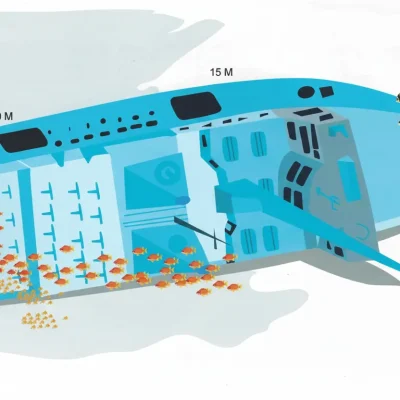
Salem Express rests on her starboard side in roughly 30 m of water, with the shallowest parts around 10–12 m near the upper side of the hull and superstructure. A common dive plan is to start at the stern at the deepest point: you descend to the seabed to view the two large propellers and rudders, then follow the lower side of the hull forward. As you move toward the bow you pass lifeboats still at their davits, the large funnels with the “S” emblem, and then reach the bow area where the open bow door and collision damage are clearly visible. Many guides keep the dive completely external, circling or partially circling the wreck, using a multilevel profile (deepest at the stern, then progressively shallower along the upper side and superstructure) and explicitly avoiding inside penetration out of respect for the wreck’s status as a mass‑casualty site.

Marine Life

Even decades after the sinking, marine life on the Salem Express remains relatively sparse compared with natural reefs and long‑standing wrecks, although colonisation is increasing over time. You can expect some hard coral growth on exposed surfaces, plus sponges and encrusting life along the hull and superstructure. Fish life typically includes groupers, lionfish, crocodilefish, surgeonfish, and other common Red Sea species, with more schooling fish and general biomass found on the nearby reef than directly on the wreck itself. The main attraction of this site is therefore its historical and emotional impact and the sheer scale of the wreck, rather than exceptional coral or fish density.

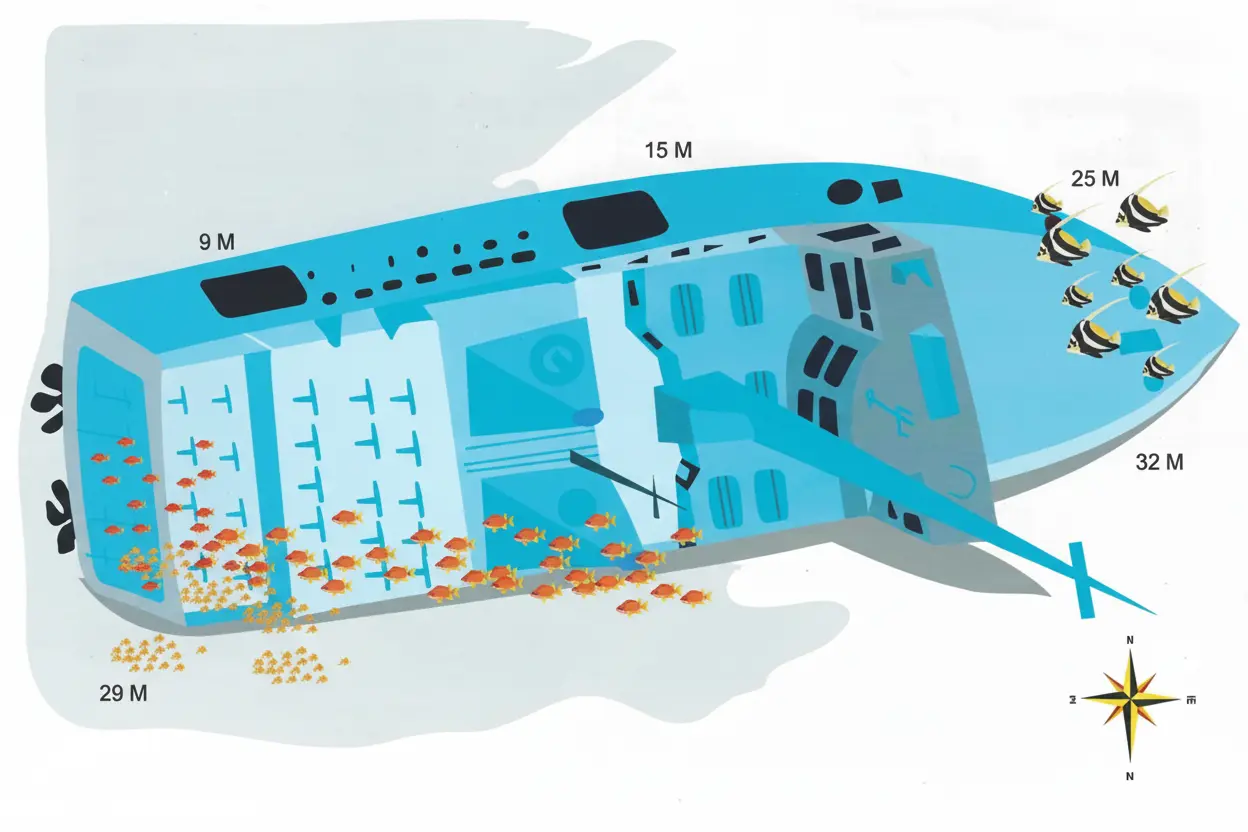
Salem Express

Max Depth: 33 Meters

Wreck starts around 10–12 m at the shallowest point, hull and decks run down to a seabed of about 30–33 m

Level: Advanced

Suitable only for experienced, calm divers, with very good buoyancy and awareness,

Location: Soma Bay South

South of Safaga, next to the Hyndman/Hyandeman reef, just south of Shaab Sheer.

Water Temp: 22°C - 29°C

Roughly 22–24 °C in winter, 23–25 °C in spring, 27–29 °C in summer, 26–28 °C in autumn

Transit Time: 90 Minutes

Around 80–100 minutes by boat from Soma Bay,sea‑state and boat speed dependent.