Daily Diving
Diving in Soma Bay: Your Complete Red Sea Guide
If you want warm, clear water, easy reefs for your first breaths underwater and dramatic walls for logged divers, diving

Key takeaways
- Soma Bay sits on a sheltered stretch of Egypt’s Red Sea coast, giving beginners calm, protected water while certified divers reach world-class reefs within a short boat ride.
- Panorama Reef and Middle Reef are the signature nearby sites, with sloping walls, coral gardens and busy fish life that suit a wide range of certification levels.
- The Red Sea supports around 1,200 coral reef fish species and roughly 300 hard coral species, so most dives include vivid reef scenery and frequent marine encounters.
- Water stays warm most of the year, and small-group dives with a local PADI center make the day relaxed, safe and well-paced for every level.
If you want warm, clear water, easy reefs for your first breaths underwater and dramatic walls for logged divers, diving in Soma Bay delivers all three within a short boat ride. This guide walks you through the best nearby reefs, the conditions to expect, what a day on the water looks like with our team, and how to book your first dive with confidence.
We are the Extra Fun Diving Club, a 5-star PADI dive center based in Soma Bay, and we spend most days out on this coast with divers from all over the world. Below is the honest, practical picture we share with guests before they get in the water.
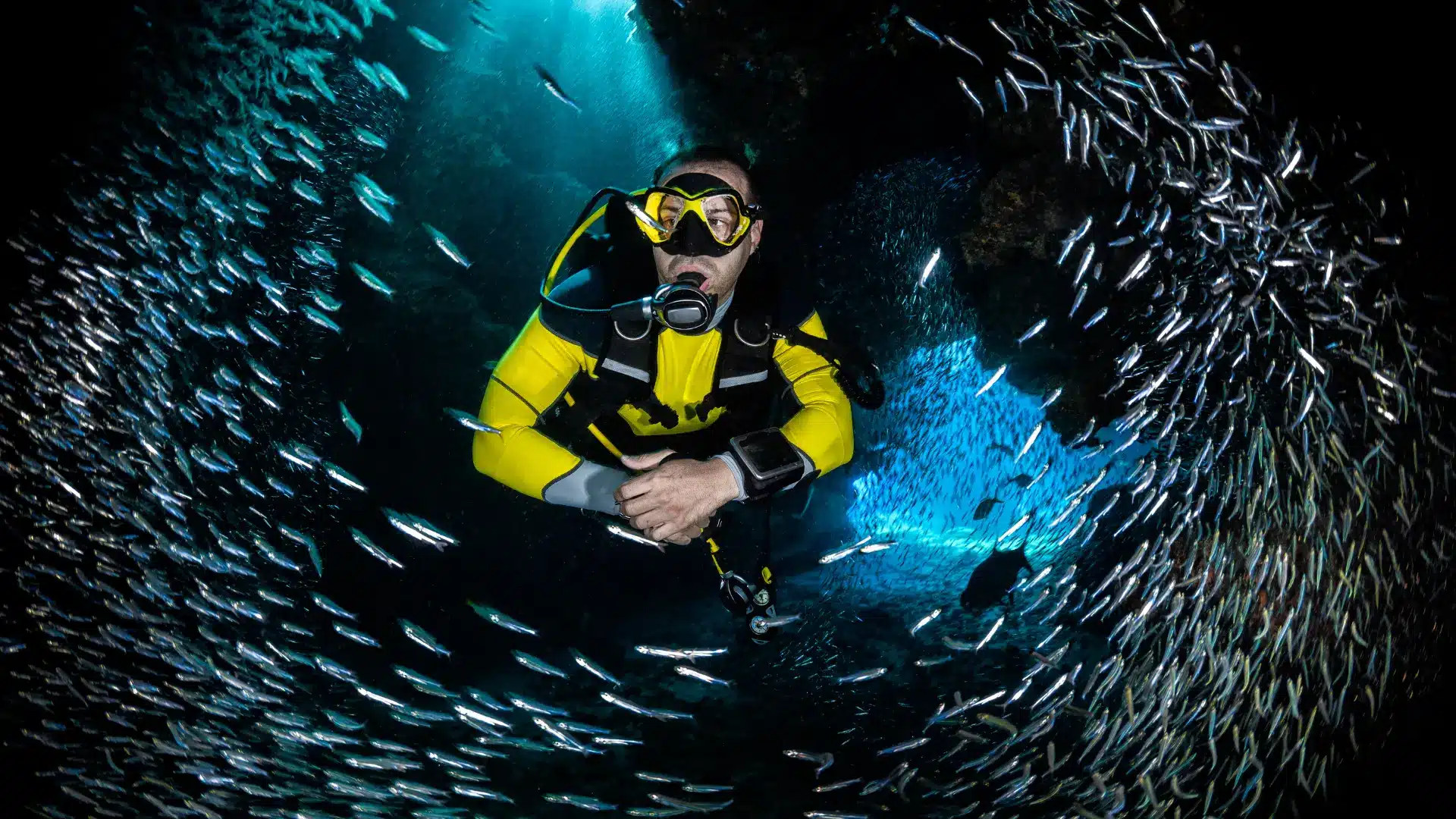
Soma Bay is a quiet peninsula on Egypt’s Red Sea coast, tucked between Hurghada and Safaga. What makes it special for divers is the shape of the bay itself. The sheltered water close to shore stays calm on most days, so newer divers get gentle, protected conditions to learn in, while the open reefs sit close enough to reach quickly by boat.
That combination is rare. Complete beginners can try a Discover Scuba Diving session in shallow, guided water, families can mix diving with snorkeling, and certified divers can head straight to deeper sites. Everyone launches from the same friendly base, which keeps the day simple and social.
If you have never dived before, here is the short version of how it works:
We explain every term as we go, so you never feel lost in jargon.
The reefs around Soma Bay and neighboring Safaga are the reason divers keep coming back. A few stand out.
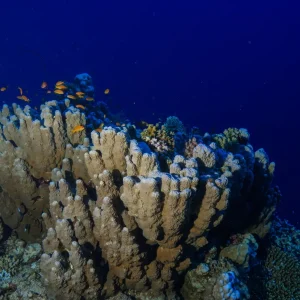
Panorama Reef is the headline site, and it earns the name. It is a large coral block with sloping walls that drop into blue water, decorated with soft corals and busy schools of fish. Newer divers can stay along the shallower shoulders and coral gardens near the top, while experienced divers follow the wall deeper to watch the reef fall away beneath them. On a good day the visibility opens up and the whole structure comes into view at once.
Middle Reef is a gentler, sheltered site that works well for skill building and relaxed fun dives. Coral heads rise from a sandy bottom, and the calmer profile makes it a favorite for divers refreshing their skills or finishing coursework. It is also a lovely spot for slow underwater photography, since there is time to hover and watch small reef life go about its day.
From Soma Bay and Safaga, day boats also reach a spread of other reefs and, for those with the right experience, the region’s famous wrecks further afield. If you want to plan around specific sites, we are happy to build a trip around your level, whether that is easy coral gardens or more ambitious deep walls.
One of the joys of Red Sea diving is how welcoming the conditions are.
The water here is warm for most of the year. In the cooler winter months it typically sits in the low twenties Celsius, and it climbs toward the low thirties at the height of summer, according to sea temperature records for Soma Bay. In practice that means a wetsuit keeps you comfortable year-round, with a thinner suit in summer and a slightly thicker one in winter. We help you choose the right thickness when you arrive.
Clear water is part of the Red Sea’s reputation. On typical days you can expect long, open visibility that lets you take in whole reef walls and spot movement well before you reach it. Conditions shift a little with season and weather, and our guides read the daily picture and pick sites that show the reefs at their best.
This is where the Red Sea truly shines. It is one of the richest reef systems in the world: reference figures put the number of coral reef fish species at around 1,200, with roughly ten percent found nowhere else, alongside close to 300 species of hard coral. On a single dive you might drift past clouds of anthias, spot a well-camouflaged octopus, watch a moray tuck into a crevice, or, on the right day, share the water with dolphins near the surface.

People often ask what actually happens on the day, so here is the honest rhythm of a trip with us.
You arrive in the morning and meet your guide and small group. We check your gear together, sort out sizing for anyone renting, and run through a clear, unhurried briefing that covers the site layout, the plan and the safety signals. Boarding is relaxed, and there is unlimited food and drinks on board to keep the day easy.
Once we reach the reef, we dive in small groups so your guide can stay close and set a comfortable pace. A typical outing includes two dives with a surface interval in between, and that break is half the fun: time to warm up, snack, swap stories and let your body off-gas before the next dive. Between dives your guide talks through what you saw and what to look for next.
The details we handle so you can just enjoy the water:
Safety runs quietly through everything we do. We plan conservative profiles, watch air and depth, and never push anyone beyond their comfort or training. That steady, friendly approach is what our guests mention most.
A little planning makes your dive holiday smoother.
The small-group approach deserves one more word. Diving in a tight group is not only more relaxed, it is genuinely safer, because your guide can watch everyone closely, respond quickly and tailor the dive to the people actually in the water. It also means more of those quiet, memorable moments, hovering over a coral head while an octopus changes color right in front of you.
The simplest next step is to tell us your level and travel dates so we can match you to the right dive or course. If you have never dived, start with a Discover Scuba Diving session and see the reef for yourself. If you are certified, pick your days and we will plan sites around your experience. And if you want to earn a qualification, our PADI courses run from your very first breaths underwater through to advanced training.
Reach out to our team at Extra Fun Diving Club, tell us what you are hoping to see, and we will help you build a Soma Bay diving trip that fits your level, your family and your pace. The reefs are ready when you are.
If you want warm, clear water, easy reefs for your first breaths underwater and dramatic walls for logged divers, diving
Scuba Diving in Hurghada Are you ready to embark on an underwater adventure like no other? Hurghada, Red Sea, Egypt
top 10 Red Sea dive sites Red Sea dive sites are one of the most enchanting diving destinations in the